

AZTECH MOUNTAIN 10 PART IV
Eve in the Garden of Aspen
by Ted Conovor
New York Times
Jan. 1, 1995
Desperate to divert a houseful of guests after a plumbing disaster at her Colorado ranch in 1939, Elizabeth Paepcke acted on a tip and led her friends on a ski outing to the lapsed silver-mining town of Aspen.

They hitched a ride partway up Aspen Mountain in the back of a truck filled with the area’s last mining crew, pulled sealskins over their skis for traction and proceeded to herringbone uphill for five hours.
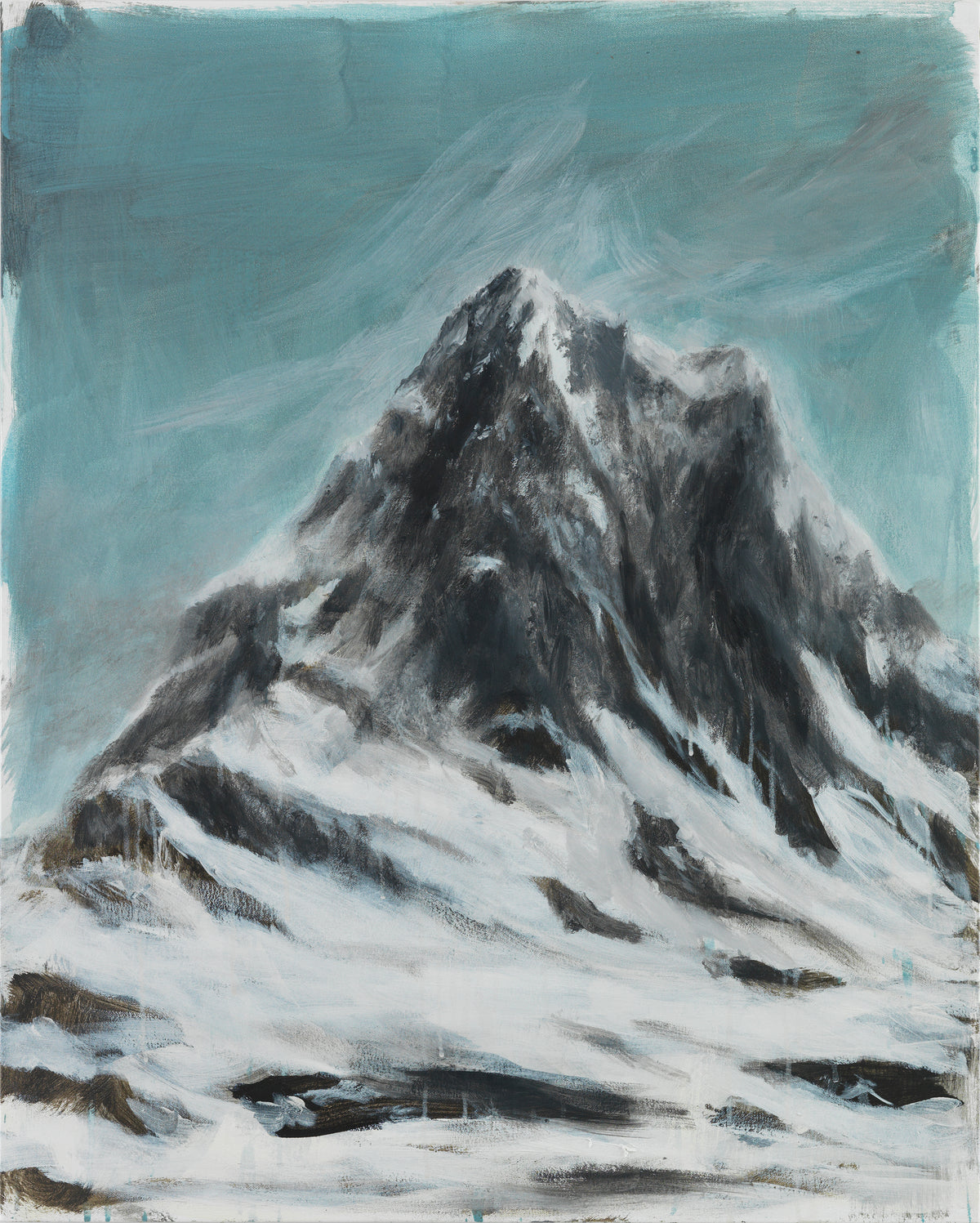
“At the top, we halted in frozen admiration,” Paepcke (pronounced PEP-key) wrote in a memoir. “In all that landscape of rock, snow and ice, there was neither print of animal nor track of man. We were alone as though the world had just been created and we its first inhabitants.”
Today, the residents of a reborn Aspen cherish a creation story that begins with Elizabeth Paepcke on that frozen peak. Upon returning in 1945 with her husband, Walter, a Chicago industrialist, the two saw in Aspen’s superb setting and shuttered Victorian houses the possibility of a new Chautauqua. Assisted by her brother, the arms-control adviser Paul Nitze, and friends like Robert Hutchins, president of the University of Chicago, and the philosopher Mortimer Adler, the Paepckes soon laid the foundation for a ski town with a highbrow cultural life -- an “Athens of the West,” Adler liked to call it.
The Aspen idea, in Walter’s words, was to create a place “for man’s complete life …where he can profit by healthy, physical recreation, with facilities at hand for his enjoyment of art, music, and education.” The purity of their original vision and the continuing despoliation of the garden by developers and pleasure-seekers make the Paepckes seem, to present-day Aspenites, a lot like Adam and Eve.
Elizabeth, who had studied painting at the Art Institute of Chicago, was a pillar of that city’s cultural life and worked as a decorator and theater designer -- and teacher to her husband. When Walter was contemplating an advertising campaign for the Container Corporation, Elizabeth pushed him to use distinguished designers instead of commercial artists. The resulting “Great Ideas of Western Man” campaign became an advertising milestone. The two combined culture and commerce again in Adler’s first Great Books group (the “fat man’s group” it was called, for all the prominent business members) and later in the Aspen Institute.
“In Aspen, I met this beautiful lady in her 80’s who looked like Katharine Hepburn,” Andy Warhol wrote in 1985. Her beauty-- she had cobalt blue eyes and a dazzling smile -- was the first thing people noticed about Elizabeth, but references to it vexed her. “She thought it was shallow,” said Merrill Ford, a longtime friend.
Instead, Elizabeth Paepcke -- or Pussy, as her grandmother and then everyone else called her -- loved ideas and art and those who cared about them. And though she was known as the consummate gracious lady, she was equally willful. “Her style was to hold strong opinions and to raise expectations to her standard,” wrote David McLaughlin, the Aspen Institute chairman, in a tribute last summer. Even leisure was held to the highest standard. “It should concern itself with those things we do to replenish the spirit, such as listening to music, watching good films or theater, taking part in discussions of politics and ideas,” she wrote. “It is the opposite of killing time.”

The Paepckes’s high-minded circle followed European intellectual trends and the couple soon became important American promoters of the Bauhaus design movement. Walter engaged as a consultant the architect Walter Gropius, helped bring Laszlo Moholy-Nagy to the Institute of Design in Chicago and installed the artist and designer Herbert Bayer as Aspen town manager.
Elizabeth’s father, William A. Nitze, was for many years chairman of romance languages at the University of Chicago; Walter was the son of a prominent German business family. The couple spoke German at home; their daughter, Antonia, says she was at a disadvantage for not knowing English when she started school. After World War II, the Paepckes tried to revive an appreciation of German culture by staging a bicentennial celebration of the birth of Goethe -- in, of all places, Aspen. Working with Hutchins and Adler, they attracted such figures as Thornton Wilder, the philosopher Jose Ortega y Gasset and, on his only visit to the United States, Albert Schweitzer.As the historian
James Sloan Allen has written, the Paepckes believed in moral discipline, social responsibility, hard work and restraint. Aspen, which they came to regard as their child, thrived on these values during the 50’s but later rebelled. After Walter’s death in 1960, Elizabeth reigned alone during a decade that brought to Aspen drugs, free love and Hunter S. Thompson. Elizabeth’s disenchantment increased in the 70’s during a brouhaha in which the anti-growth-minded City Council refused the Aspen Institute’s application to build a hotel for its visitors; the institute angrily moved most of its operations to Maryland. In the 80’s, new wealth poured into Aspen, bringing in megamansions and pricing out full-time residents. Ariane Zurcher, Elizabeth’s granddaughter, said, “She hated the display of wealth, the competition.”

Addressing the opening session of the design conference in 1987, she asked: “Are we going to kill the golden goose by feeding the animal until its liver becomes distended and
we produce a pate which is so rich that none of us can digest it anymore? What price glory?” She told a reporter that Aspen had “become a town of glitz and glamour . . . a nut without a kernel.” “My heart,” she said, “is broken.”
But the town continued to love its queen and conscience. A Harvard-educated land surveyor explained to me his admiration: Elizabeth Paepcke, blessed with looks, wealth and intelligence, had somehow resisted the temptations that can wreck similarly advantaged people. Perhaps Aspen admired her so much because, though similarly blessed, it has not likewise succeeded.
Paepcke was celebrated for her hospitality, for her ability to listen, for her love of a good bawdy joke, for ascending a ladder every Christmas to light the real candles on her tree. Into her 80’s, she still shoveled snow from her walk (“I think she thought she could do it better than anyone else,” said a friend) and worked for hours in her garden. On hikes into the surrounding hills, according to her granddaughter, she would pack not only a little sipping whisky but gloves that would allow her to pull up thistles. It says much about Paepcke aspirations that she would attempt to weed the mountains. “When I die,” she once told a friend, “just throw me on the compost heap.”