
Article: First Tracks: The Generation That Built Skiing in Aspen

First Tracks: The Generation That Built Skiing in Aspen
First, there was a generation of skiers who saw the American mountains differently. They preceded lift lines, ski-in/ski-out hotels, backcountry huts and the ritual of meeting friends for first chair. These pioneers saw possibility firsthand in Europe while fighting World War II. And after the war, they set out to build something in the likeness of ski culture they experienced in the Alps.

The 10th Mountain Division trained at Camp Hale, above Aspen. Many veterans returned from WWII to build today's ski culture we still enjoy. (Photo: Denver Post)
The 10th Mountain Division was an unusual outfit. As the U.S. Army prepared for the possibility of fighting in Europe’s mountainous terrain, it recruited skiers, climbers, mountaineers and college athletes to become soldiers capable of moving and fighting in snow and high alpine country. They trained at Camp Hale, near Leadville, Colorado, sleeping in the cold, climbing peaks and learning to navigate terrain that would later become some of the country’s most beloved ski country.
In 1945, the division fought in the Italian Apennines, including the brutal battles for high ground that helped the Allies advance through northern Italy. The cost was enormous. Nearly 1,000 members of the division were killed in action, and thousands more were wounded. For those who came home, the mountains were no longer simply a place to play. They were a place they understood, a place where they had tested themselves, and a place many of them couldn’t imagine leaving behind.
So, they started building.

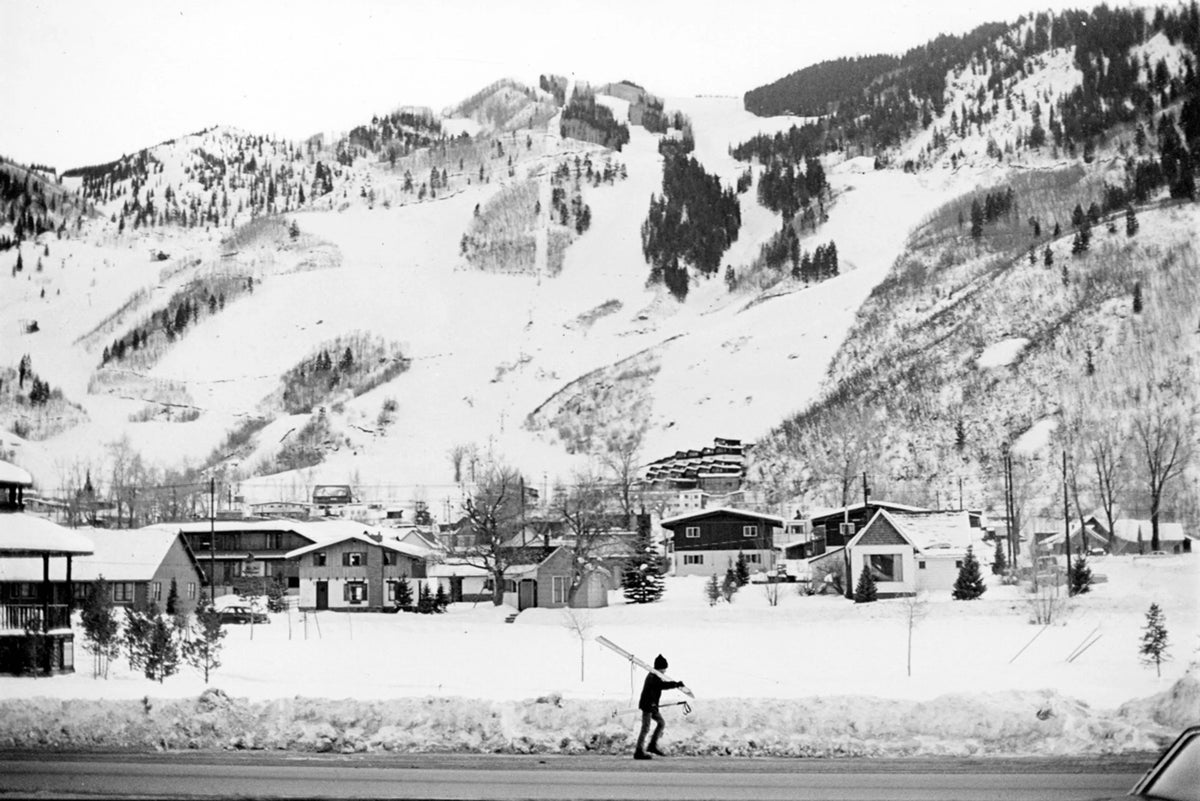
In Aspen's early days, the trail map sign said "All skiers must check with ski patrol at Sundeck before going down Annie Basin or Difficult Creek. They will be closed by 12:00 each day." See the original Sundeck in the background. (Photo: Aspen Historical Society, Duke Collection)
Aspen was one of the first places where that instinct took shape. The town had been built on silver, not skiing. Aspen’s mining economy had collapsed by the time the 10th Mountain veterans returned stateside. But, its most precious resource was untapped. Aspen’s mountains and snow piqued the interest of handful of prescient people who believed its future could be different.

Friedl Pfeifer
Austrian ski pioneer Friedl Pfeifer, who had served in the 10th, teamed up with fellow veterans John Litchfield and Percy Rideout to establish Aspen’s first ski school after the war. They taught, cut trails and helped turn a mountain with enormous potential into a place people could actually ski. With industrialist Walter Paepcke backing the development of a lift and the town’s broader cultural ambitions, Aspen opened its first chairlift in 1946.

Percy Rideout, Friedl Pfeifer, and John Litchfield in Aspen circa 1946.
(Photo: Aspen Historical Society, Grover Collection)
It was a collaboration, not a one-man invention. European mountain knowledge met American ambition. Former soldiers worked alongside local entrepreneurs, builders and visionaries. The result was a ski town that would become an international destination, with a culture that extended well beyond the slopes.
The same spirit traveled. Pete Seibert, a 10th Mountain veteran wounded during the Italian campaign, returned to Colorado and eventually helped establish Vail with fellow veteran and Army engineer Earl Eaton. Vail opened in 1962, built around a big idea: a new mountain resort with expansive terrain and a village designed for the modern ski vacation. Fritz Benedict, another veteran and an architect trained under Frank Lloyd Wright, went on to shape master plans for Vail, Snowmass and Breckenridge.
Across Colorado, veterans helped develop ski areas, design lifts, teach lessons, organize ski patrols and make the sport more accessible. Arapahoe Basin, Loveland and Ski Cooper were among the places shaped by their work. Their influence reached farther east, too. Veterans helped establish or develop resorts including Sugarbush and Stratton in Vermont, while others brought their expertise to established ski areas and ski schools around the country. More than 60 American ski areas are commonly credited with having been founded, managed or staffed by 10th Mountain veterans.
Not every great ski town began with the division. But the postwar surge in skiing, fueled in part by the 10th’s veterans, helped create the audience, expertise and momentum that made destinations across the country possible.
The veterans also carried a distinctly European mountain ethos into American life. Skiing wasn’t just about getting down a hill. It was about spending a day outside, gathering around a table, finding your people and returning to the same places until they became part of you. The mountain was the main venue, but everything around it mattered. The ski school, the hut, the lodge, the town, the dinner table and the friendships built along the way all contributed to the experience.
That idea lives on in the backcountry, too. In the early 1980s, Fritz Benedict helped establish the 10th Mountain Division Hut Association, creating a network of huts and trails inspired by the alpine touring routes of Europe. The first huts opened in 1982. Today, they allow skiers and hikers to travel through Colorado’s high country, moving from one remote shelter to the next, carrying what they need and sharing the journey with friends.
 Friedl Pfeifer and John Litchfield skiing untouched glades in Aspen circa 1946.
(Photo: Aspen Historical Society, Grover Collection)
It is a fitting legacy for a generation that learned to move through mountains together.
Today, we take much of this world for granted. But the infrastructure and culture that make those experiences possible were built by people who had to imagine them first. They came home from war and found another kind of mission in the mountains. They built the places we love, then left the rest of us to make a life in them.
Today, we’re still living in the world they created.